HANGING LEG / KNEE RAISE (POWER TOWER)
Inverts the standard crunch by curling the pelvis upward toward the ribcage, producing intense recruitment of the lower abdominal fibers.
QUICK FACTS: HANGING LEG / KNEE RAISE (POWER TOWER)
help_outline What is the Hanging Leg / Knee Raise (Power Tower)?
The Hanging Leg / Knee Raise (Power Tower) is a isolation (single-joint) exercise designed to build the Lower Rectus Abdominis & Deep Core. Inverts the standard crunch by curling the pelvis upward toward the ribcage, producing intense recruitment of the lower abdominal fibers.
fitness_center What muscles does it work?
Primary Target: Lower Rectus Abdominis & Deep Core.
Secondary Synergists: Hip Flexors, Obliques.
handyman What equipment is required?
Required Equipment: Power Tower with Forearm Pads (Captain's Chair) or Overhead Pull-Up Bar.
check_circle Is it suitable for beginners?
Rated Advanced. Beginners can safely perform this by starting with 3 sets of 10-12 (knees) reps (RPE 7), maintaining a controlled 3-second descent, and focusing on form before increasing weight.
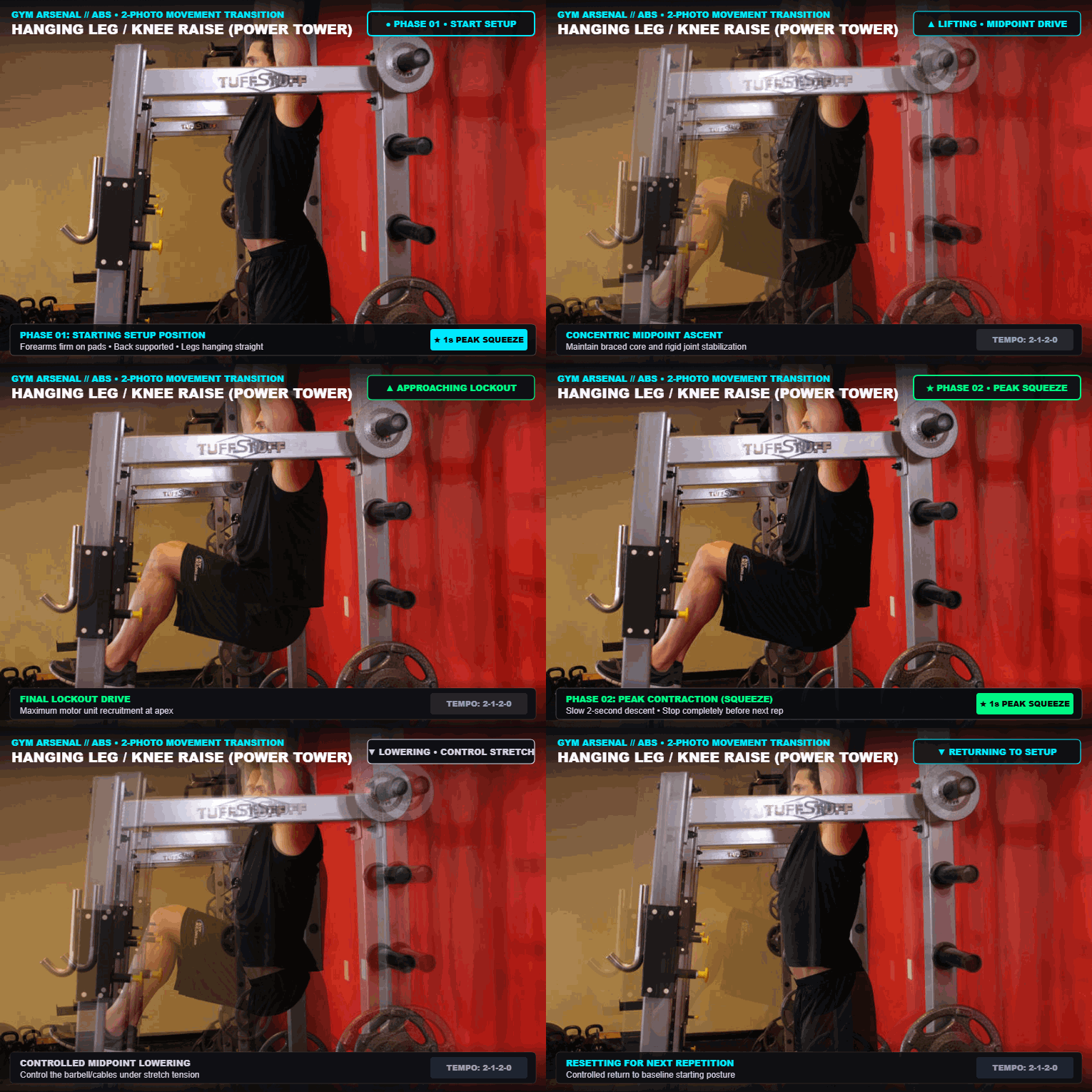
play_circle MOVEMENT DEMONSTRATION
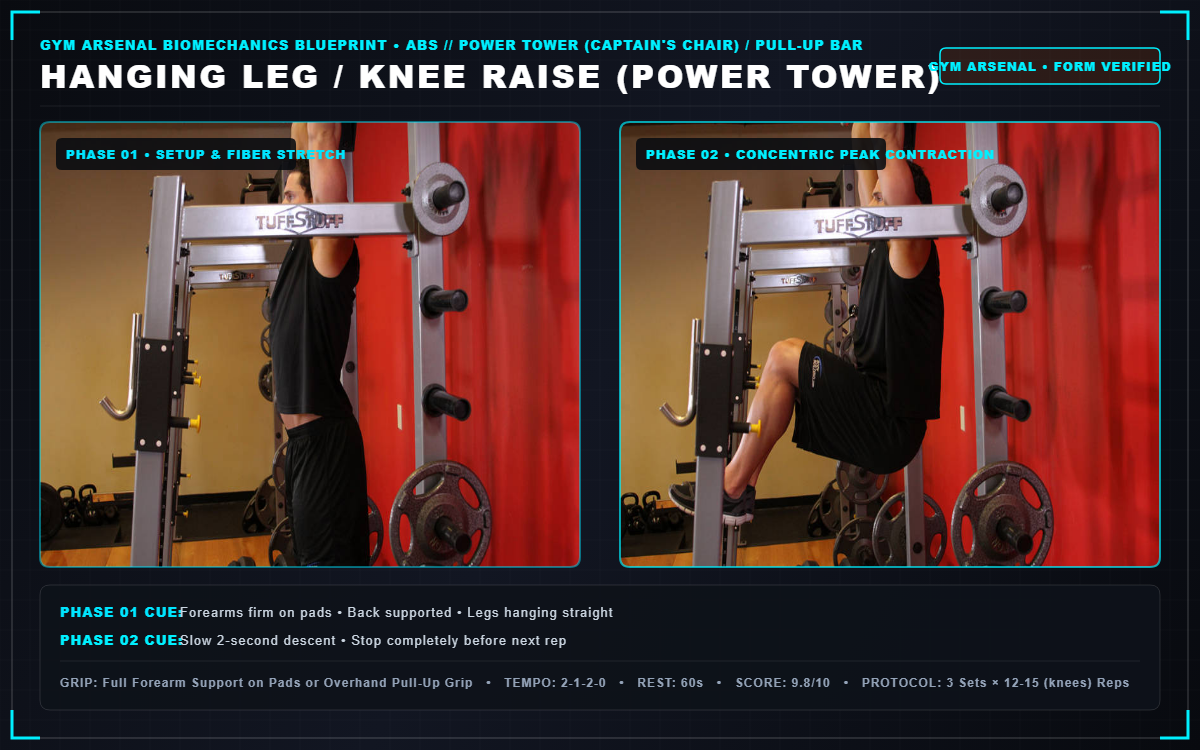
analytics ANATOMICAL BLUEPRINT
list_alt STEP-BY-STEP BIOMECHANICAL EXECUTION
Support Mount & Scapular Lock
Mount captain's chair with forearms on pads (or hang from pull-up bar). Depress shoulders away from ears.
Pelvic Curl Initiation
Do not just lift legs; initiate by tilting pelvis upward, curling knees/legs up toward chest.
Peak Abdominal Crunch
Squeeze abs at the top for 1 full second when knees reach chest height.
Strict Controlled Negative
Lower legs slowly without swinging or using pendulum momentum.
checklist FORM TECHNIQUE PARAMETERS
warning COMMON MISTAKES & PRECISION FIXES
RECOMMENDED ALTERNATIVES & VARIATIONS FOR HANGING LEG / KNEE RAISE (POWER TOWER)
Need a substitute exercise? Whether swapping between free-weight dumbbells, barbells, or commercial gym machines, here are the most biomechanically comparable movements:
RELATED ABS MOVEMENTS
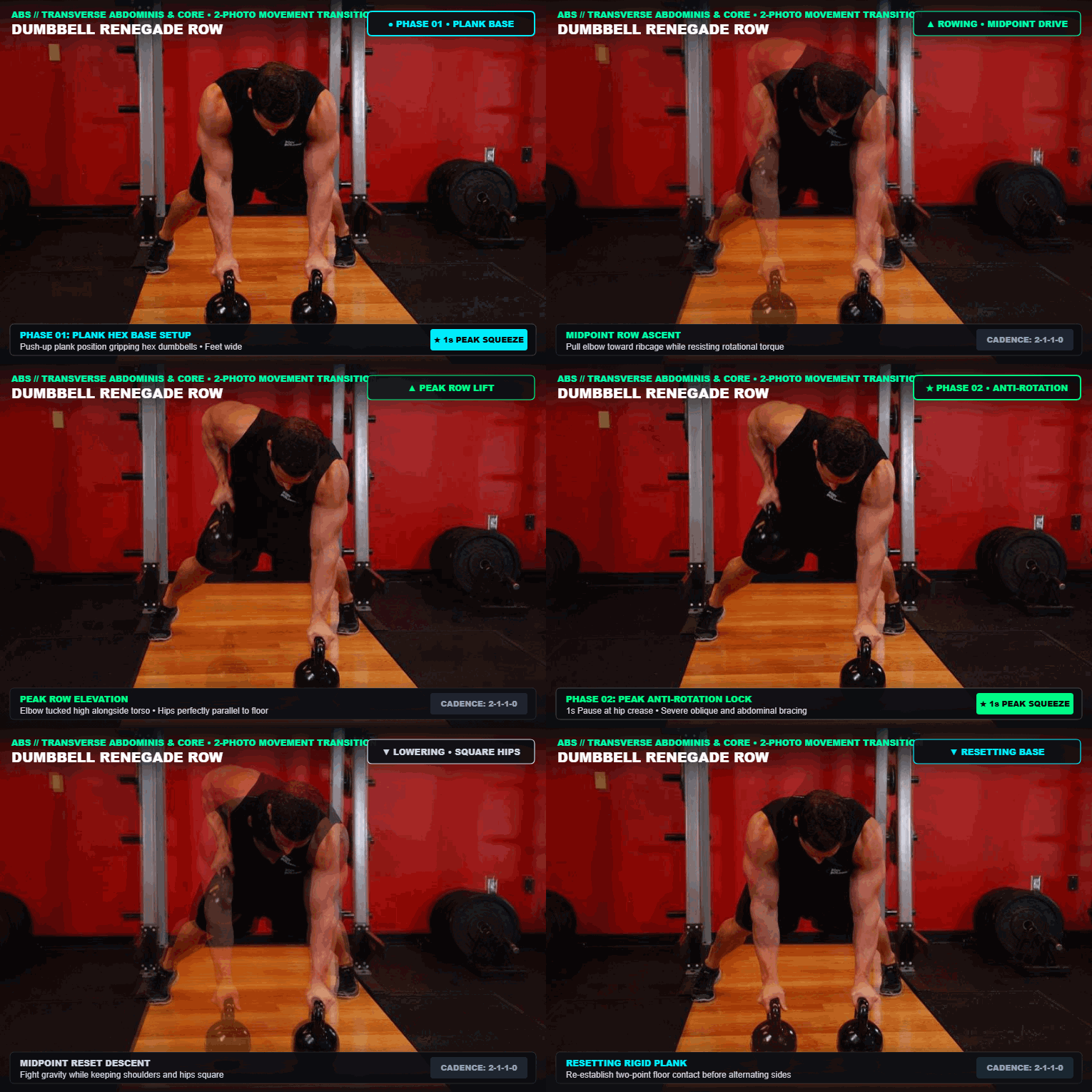 Floor Mat, Pair of Hex Dumbbells
Dumbbell Renegade Row
TRANSVERSE ABDOMINIS & OBLIQUES (ANTI-ROTATION)
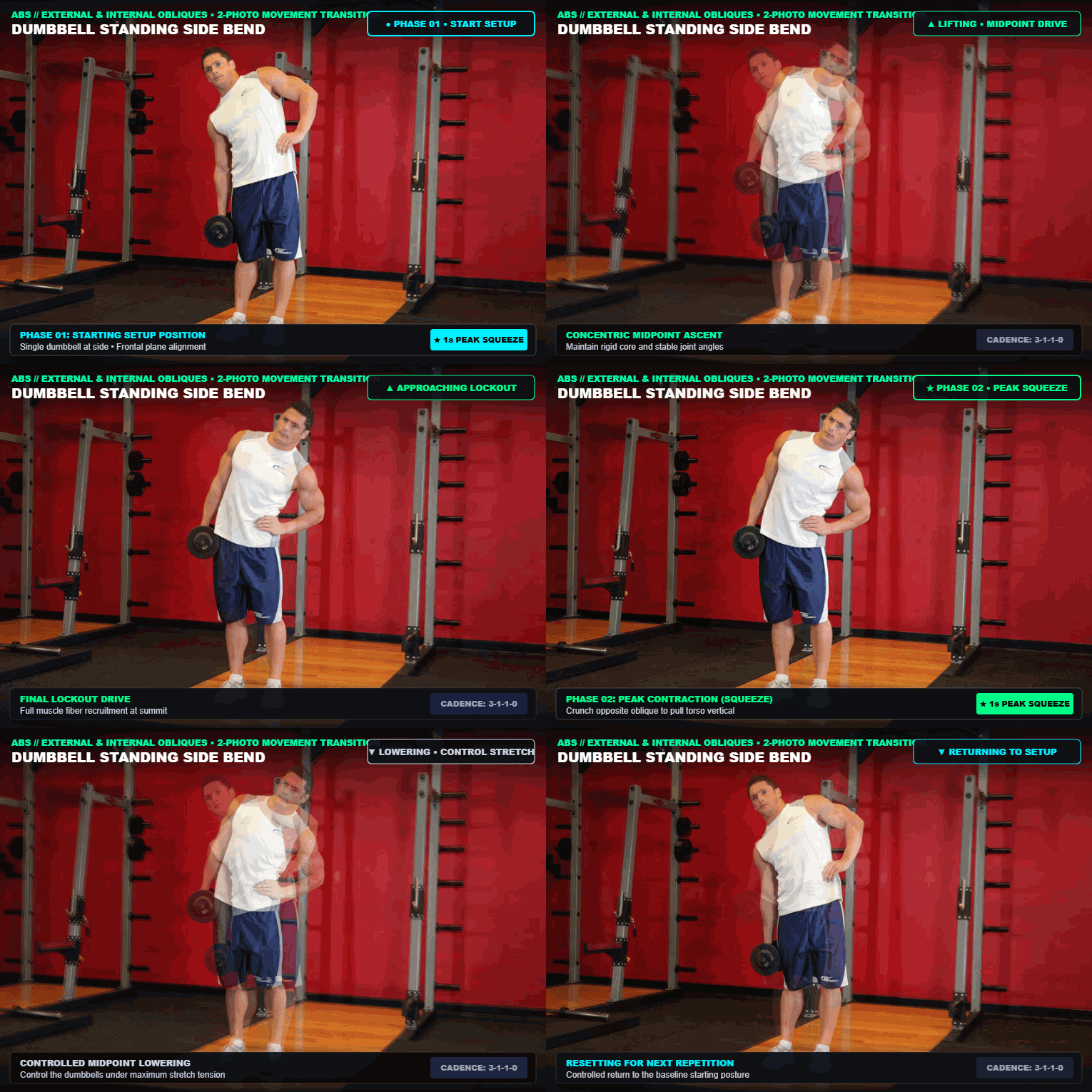 Single Dumbbell
Dumbbell Standing Side Bend
EXTERNAL & INTERNAL OBLIQUES
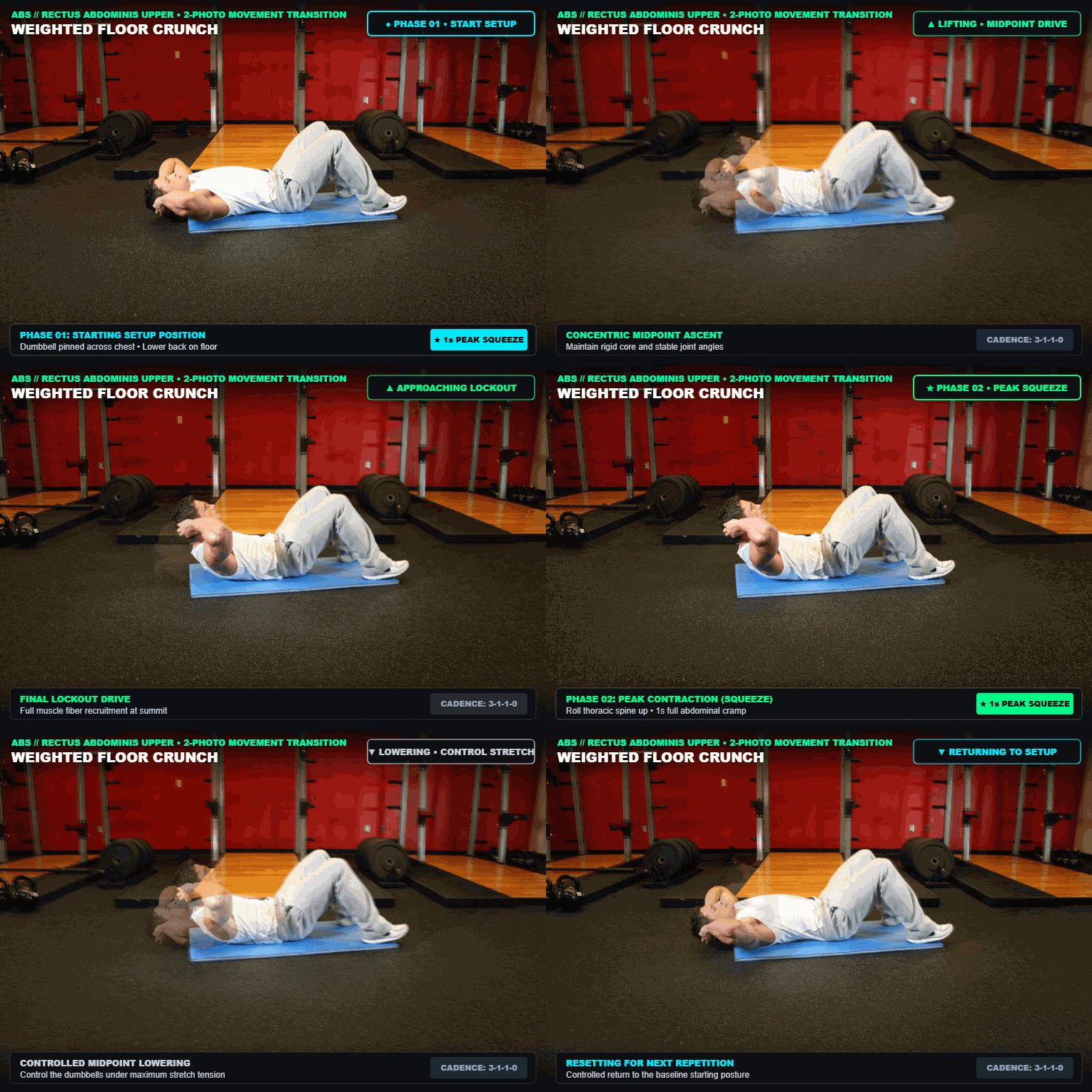 Floor Mat, Dumbbell held at chest
Weighted Abdominal Floor Crunch
RECTUS ABDOMINIS (UPPER & MID)
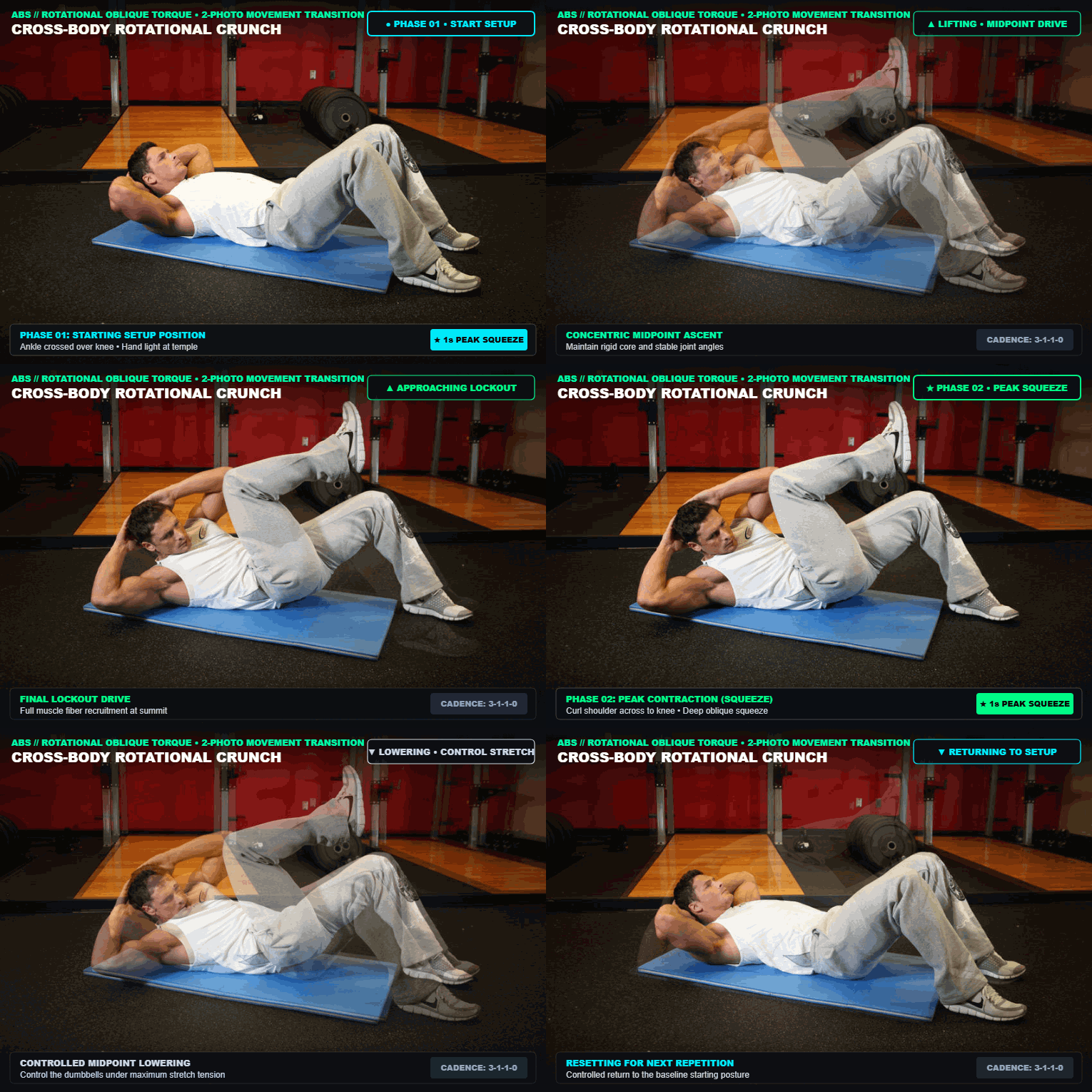 Floor Mat
Cross-Body Rotational Crunch
INTERNAL & EXTERNAL OBLIQUES, SERRATUS
ADD HANGING LEG / KNEE RAISE (POWER TOWER) TO YOUR ROUTINE
Use our intelligent routine architect to configure sets, reps, duration, and equipment pairing with zero guesswork.