GLUTE BRIDGE & HIP THRUST
The quintessential pure glute isolation movement. Floor bridging completely removes quad assistance and focuses 100% mechanical tension on peak glute contraction.
QUICK FACTS: GLUTE BRIDGE & HIP THRUST
help_outline What is the Glute Bridge & Hip Thrust?
The Glute Bridge & Hip Thrust is a compound (multi-joint) exercise designed to build the Gluteus Maximus (Direct Isolation). The quintessential pure glute isolation movement. Floor bridging completely removes quad assistance and focuses 100% mechanical tension on peak glute contraction.
fitness_center What muscles does it work?
Primary Target: Gluteus Maximus (Direct Isolation).
Secondary Synergists: Hamstrings, Lower Back, Erector Spinae.
handyman What equipment is required?
Required Equipment: Floor Mat, Dumbbell on Pelvis.
check_circle Is it suitable for beginners?
Rated Beginner. Beginners can safely perform this by starting with 3 sets of 12-15 reps (RPE 7.0), maintaining a controlled 3-second descent, and focusing on form before increasing weight.
play_circle MOVEMENT DEMONSTRATION
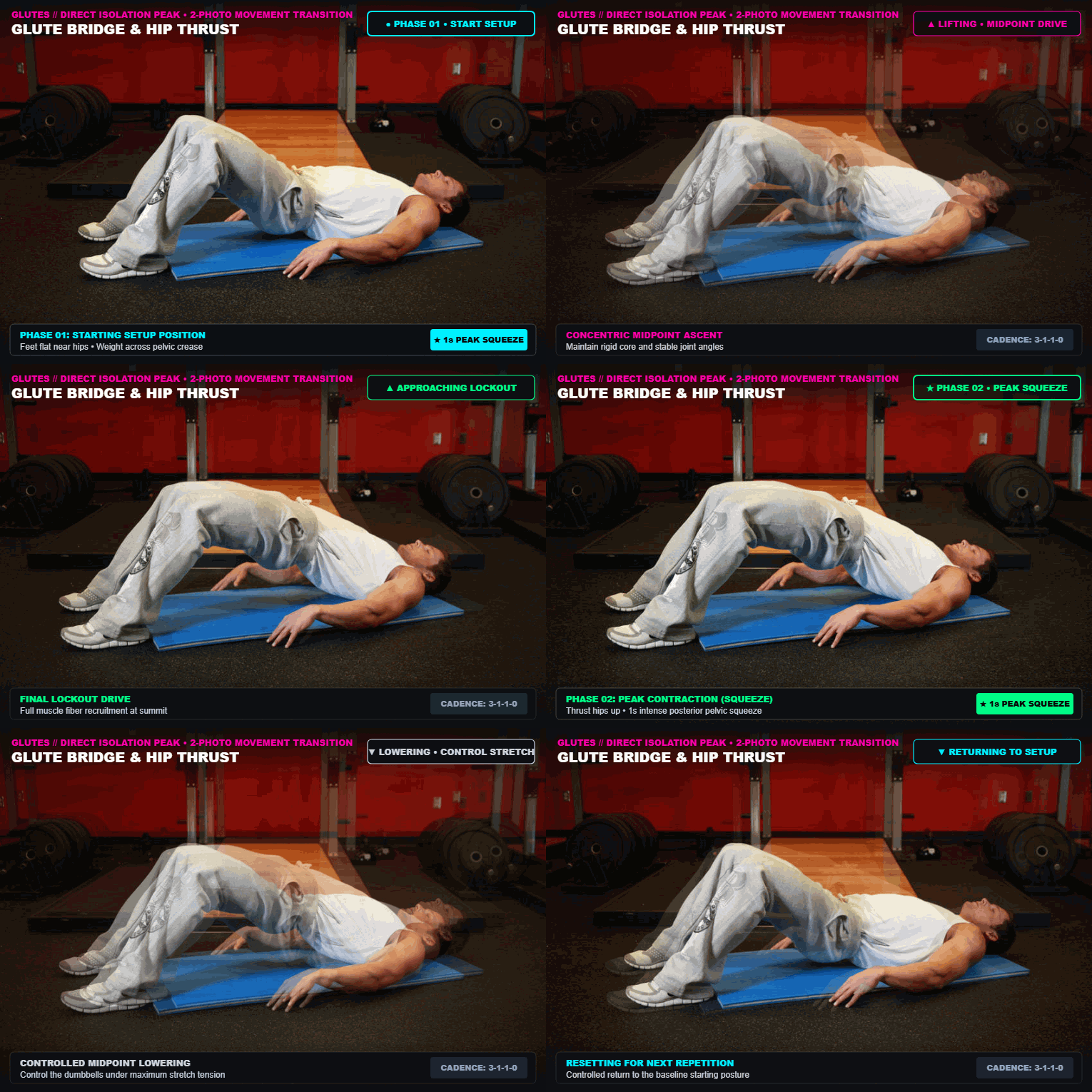
analytics ANATOMICAL BLUEPRINT
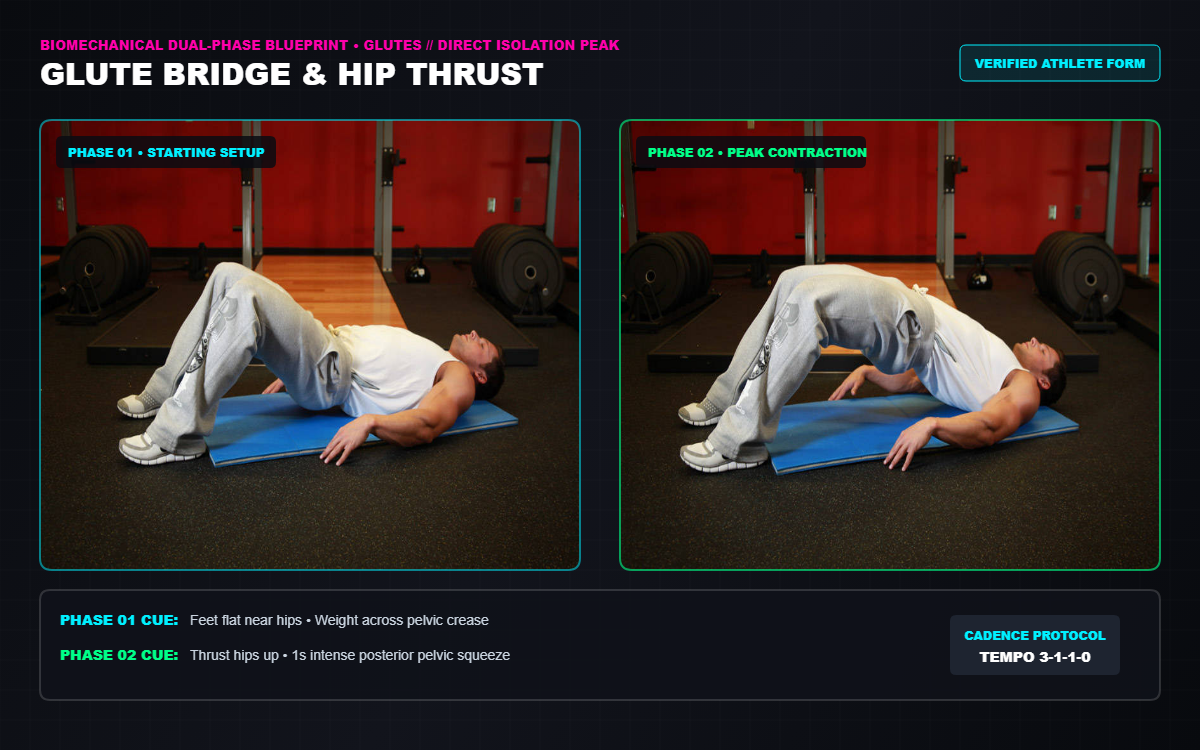
list_alt STEP-BY-STEP BIOMECHANICAL EXECUTION
Supine Pelvic Setup
Lie on back with knees bent at 90°, feet flat on floor hip-width apart.
Heel Drive Ascent
Drive heels into the floor and thrust hips upwards toward the ceiling.
Peak 1s Glute Squeeze
Lock out hips so knees, hips, and shoulders form a straight line; squeeze glutes violently for 1s.
Controlled Pelvic Descent
Lower hips back down over 3 seconds under constant glute tension.
checklist FORM TECHNIQUE PARAMETERS
warning COMMON MISTAKES & PRECISION FIXES
DUMBBELL BIOMECHANICS & HOME GYM TRAINING GUIDANCE
sync_alt Unilateral Symmetry & Wrist Freedom
Unlike fixed barbells or rigid machine handles that lock your wrists into a single plane, training with dumbbells grants each joint the freedom to naturally converge and rotate according to your carrying angle. This prevents overuse strain on wrists, elbows, and shoulders while correcting strength imbalances between left and right sides.
home Home Setup & Bench Adaptations
If you train at home without an adjustable weight bench, you can modify pressing and flying movements as floor presses or use sturdy household surfaces for chest support. Floor variations have the added benefit of naturally preventing excessive shoulder extension, making them ideal for lifters recovering from joint discomfort.
trending_up Overload with Limited Dumbbell Weight
When training at home with fixed dumbbell pairs, progressive overload is not limited to adding weight. You can stimulate equal muscle hypertrophy by slowing the eccentric phase (3 to 4 seconds), adding a 1-second pause at maximum stretch, or progressing repetitions from 8 up to 15 reps before advancing load.
RECOMMENDED ALTERNATIVES & VARIATIONS FOR GLUTE BRIDGE & HIP THRUST
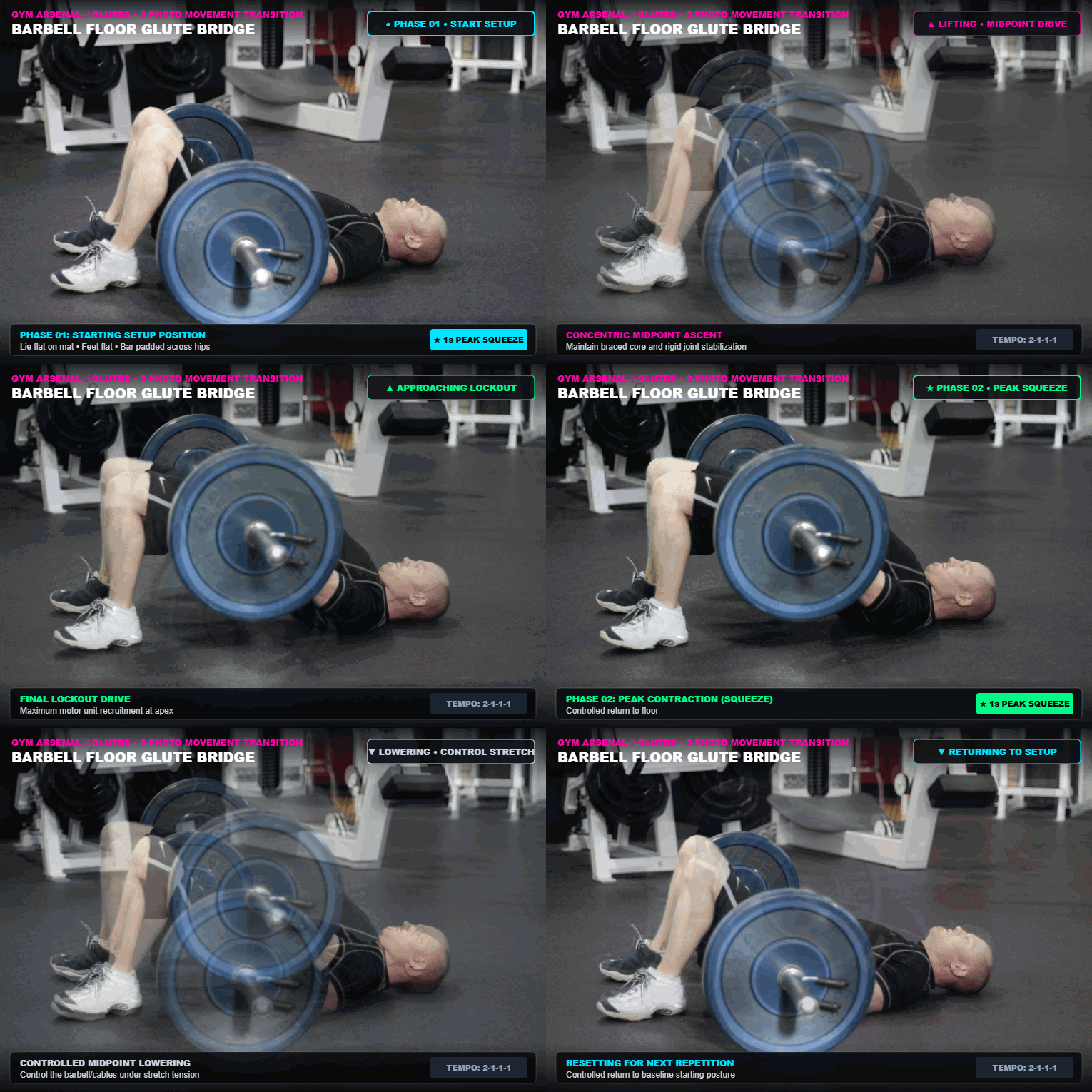
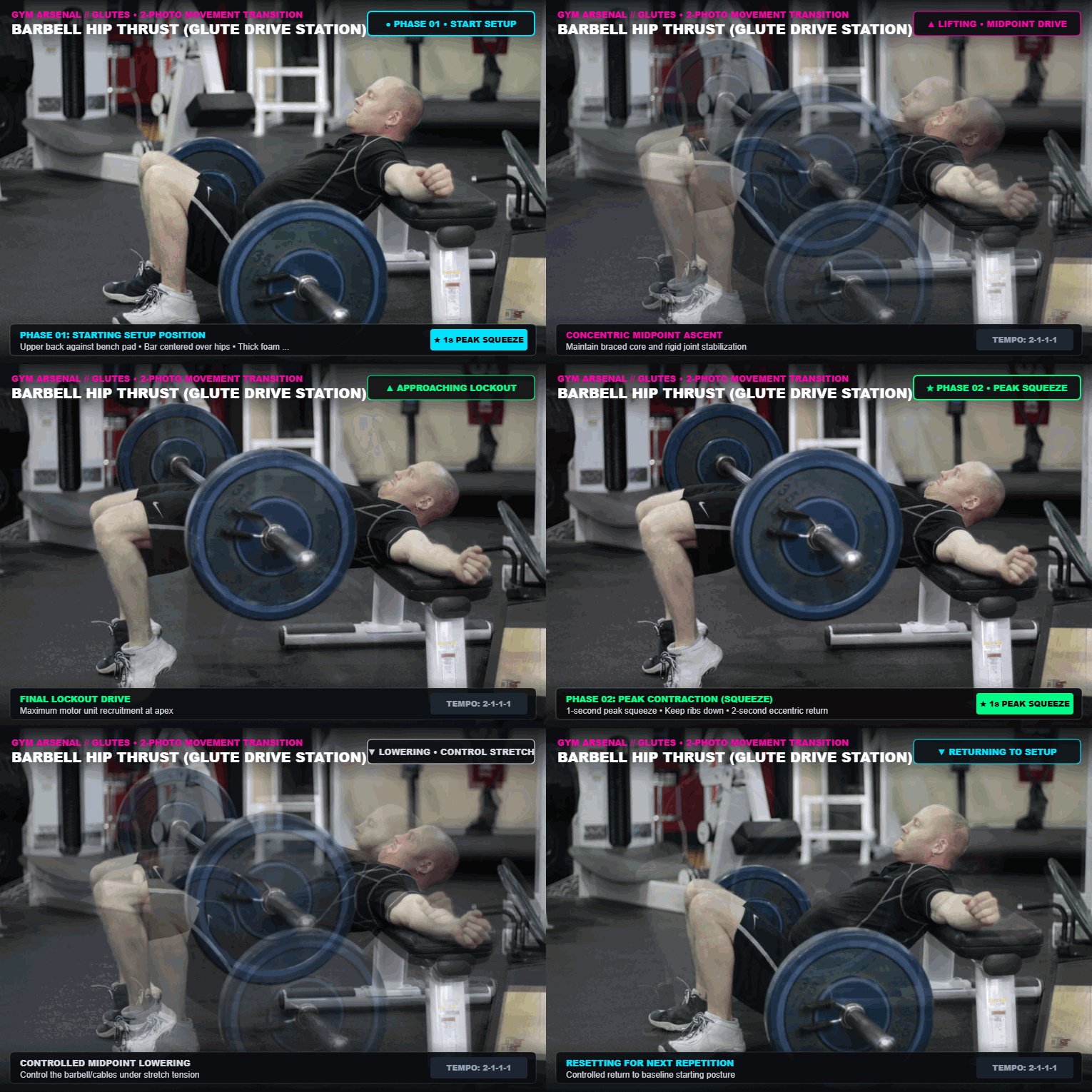
Need a substitute exercise? Whether swapping between free-weight dumbbells, barbells, or commercial gym machines, here are the most biomechanically comparable movements:
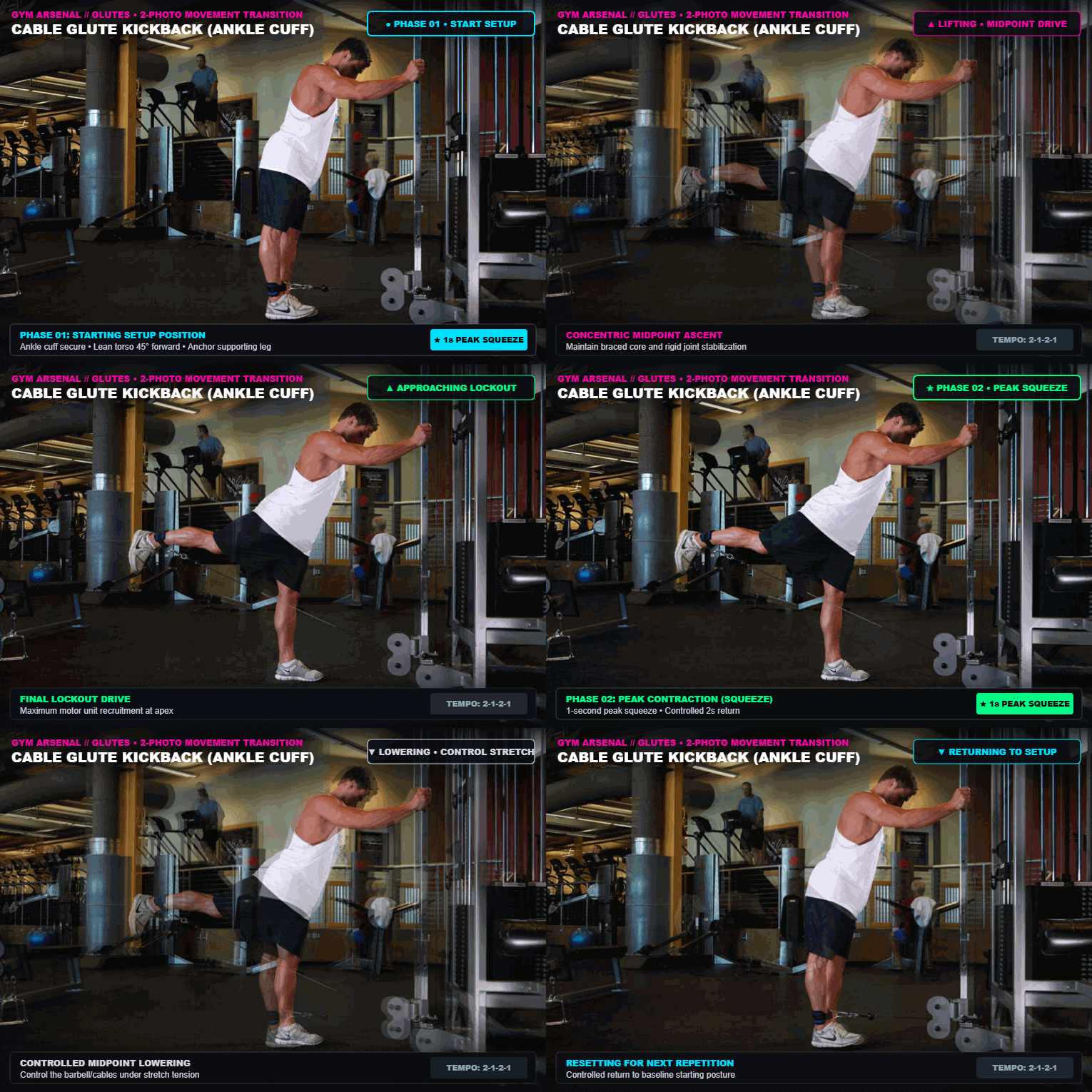
RELATED DUMBBELL GLUTES MOVEMENTS
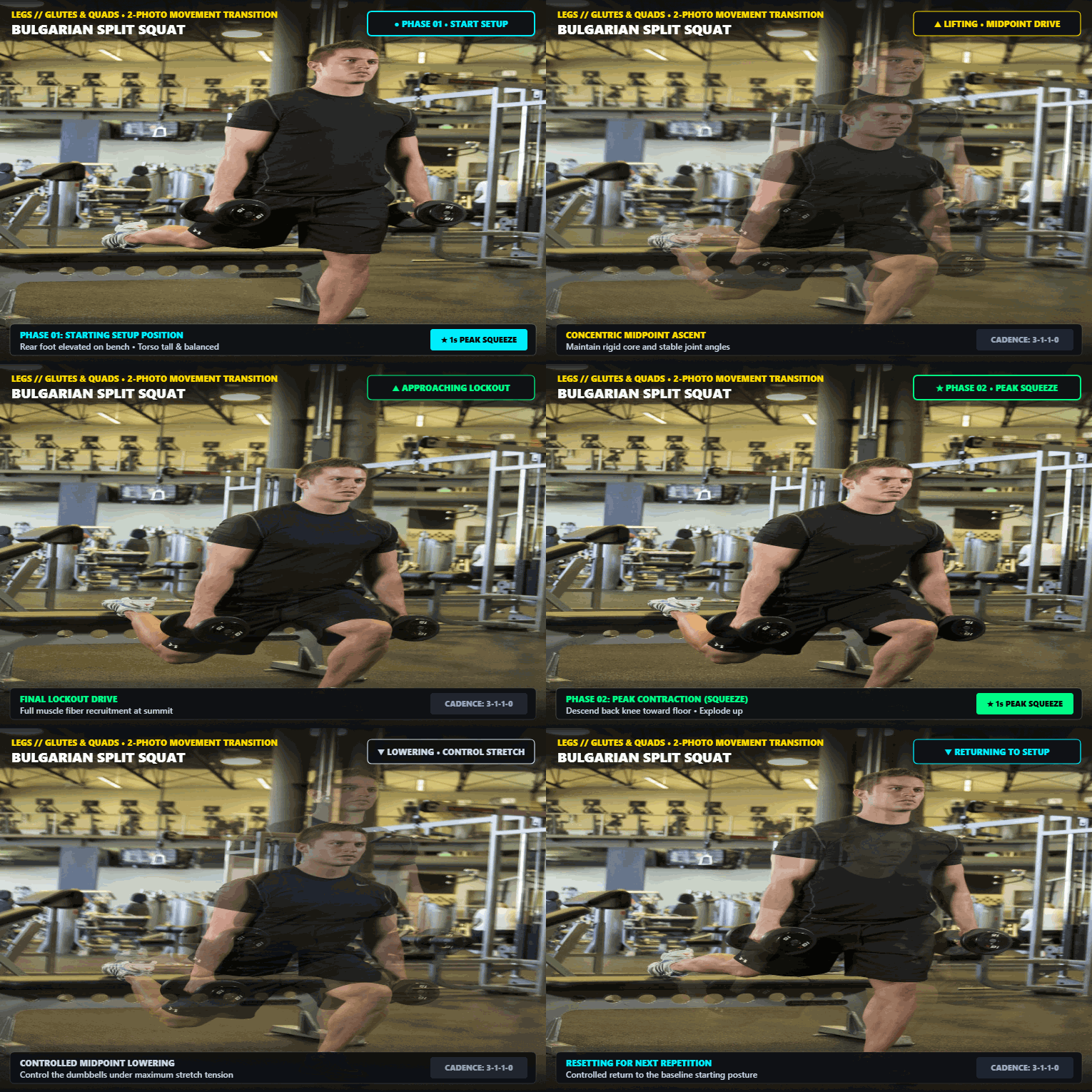 Flat Bench, Pair of Dumbbells
Dumbbell Bulgarian Split Squat
GLUTEUS MAXIMUS & MEDIUS
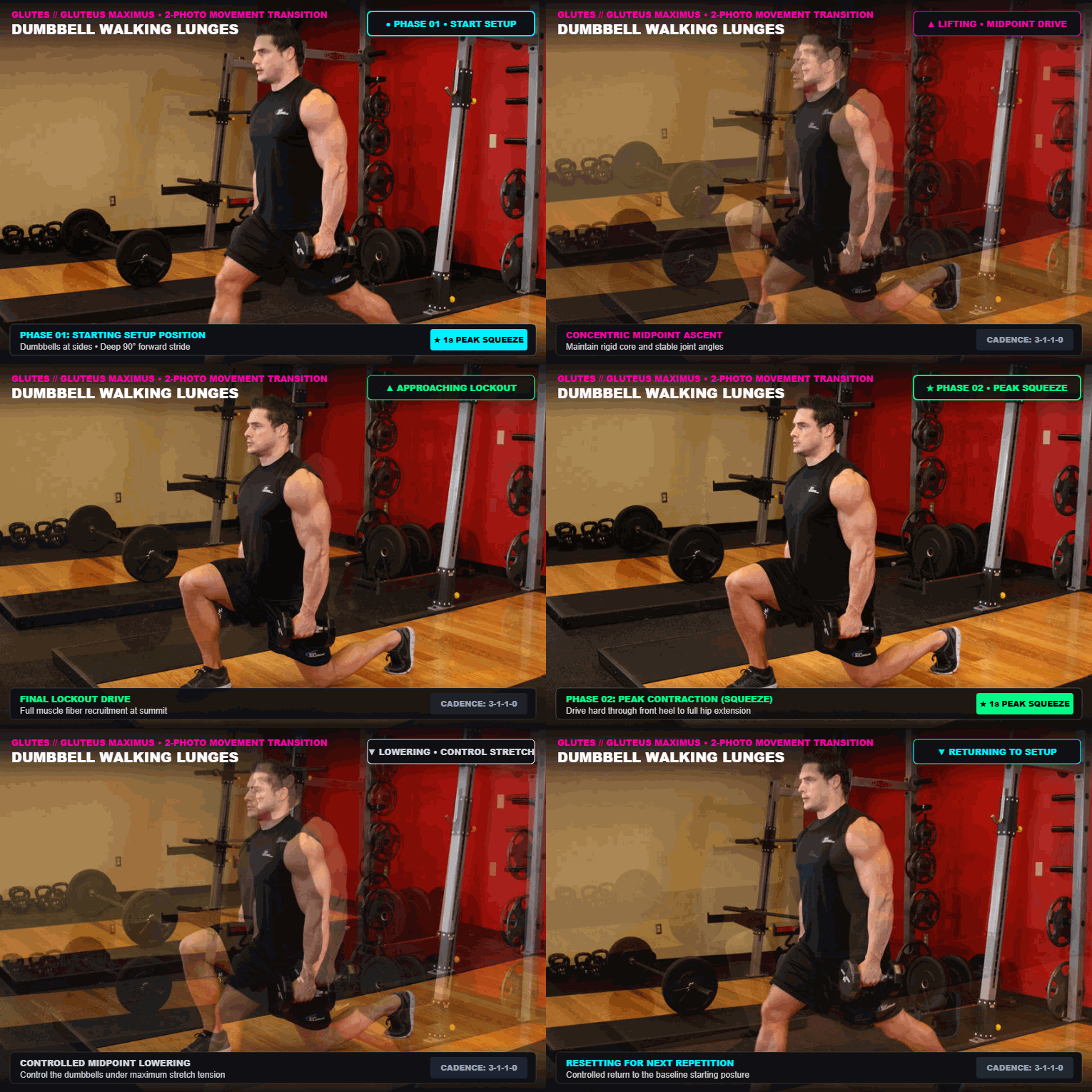 Pair of Dumbbells
Dumbbell Walking Lunges
GLUTEUS MAXIMUS & HIP EXTENSORS
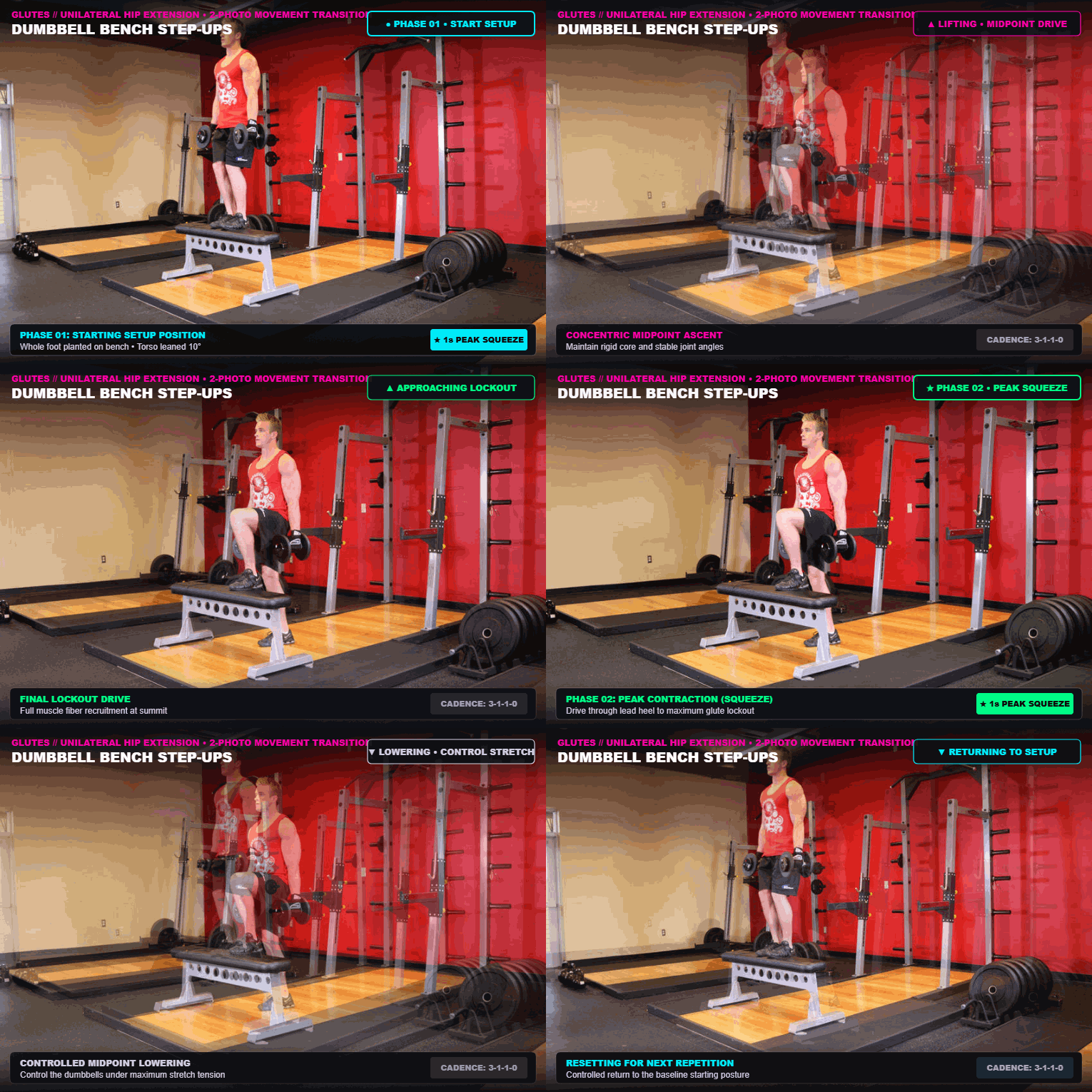 Sturdy Flat Bench, Pair of Dumbbells
Dumbbell Bench Step-Ups
GLUTEUS MAXIMUS & UPPER GLUTE SHELF
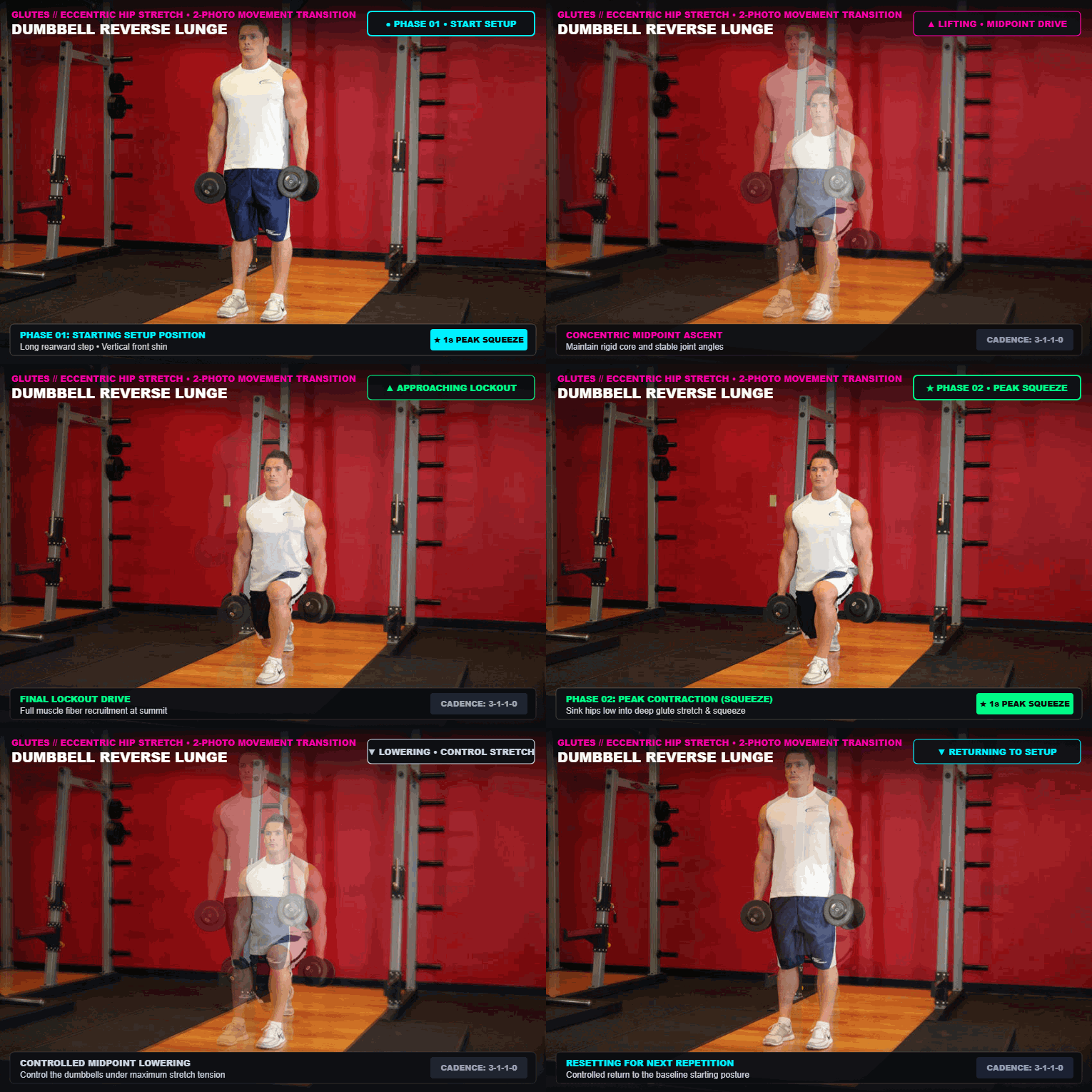 Pair of Dumbbells
Dumbbell Reverse Lunge
GLUTEUS MAXIMUS & MEDIUS
ADD GLUTE BRIDGE & HIP THRUST TO YOUR ROUTINE
Use our intelligent routine architect to configure sets, reps, duration, and equipment pairing with zero guesswork.